
Copper Busbar Punching Guide for 415 V / 50 Hz Nigerian Panel Work — Holes, Dies and Accuracy
2026-11-10
Topic: Copper busbar punching for 415 V / 50 Hz Nigerian panel work · holes · dies · accuracy
Brand focus: LTMC 303U-3-C · 503U-3-C · 803U-3-C
For: Switchgear, panel and busduct shops in Lagos, Abuja, Port Harcourt and Kano · three-phase 415 V / 50 Hz
Quick answer
Busbar punching quality for 415 V / 50 Hz Nigerian panel work is judged by finished hole position from the approved datum, hole size and profile, edge distance, burr and deformation — not by machine positioning-accuracy claims alone. On LTMC 303U-3-C / 503U-3-C / 803U-3-C machines, a multi-station turret plus adequate tonnage covers common round and oblong families when dies, clearance and strippers match the copper or aluminium temper.
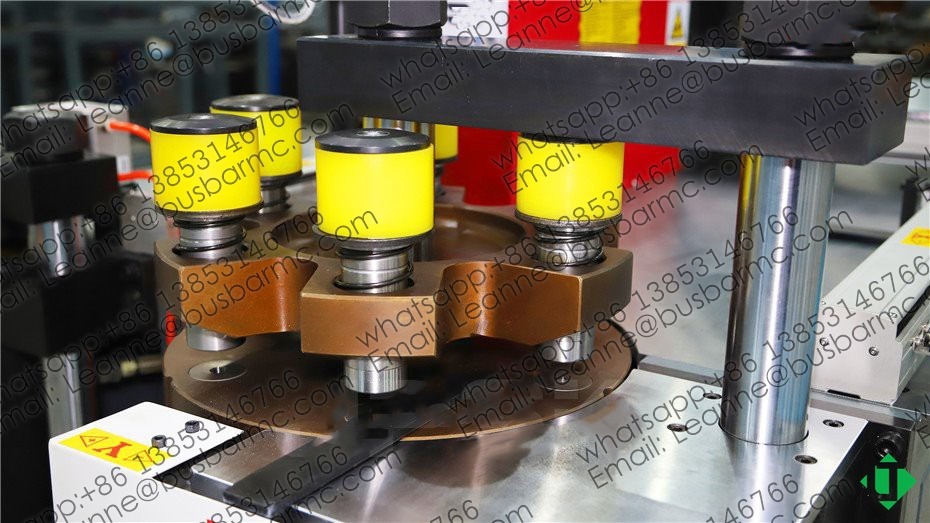
Punching turret unit with multi-station dies
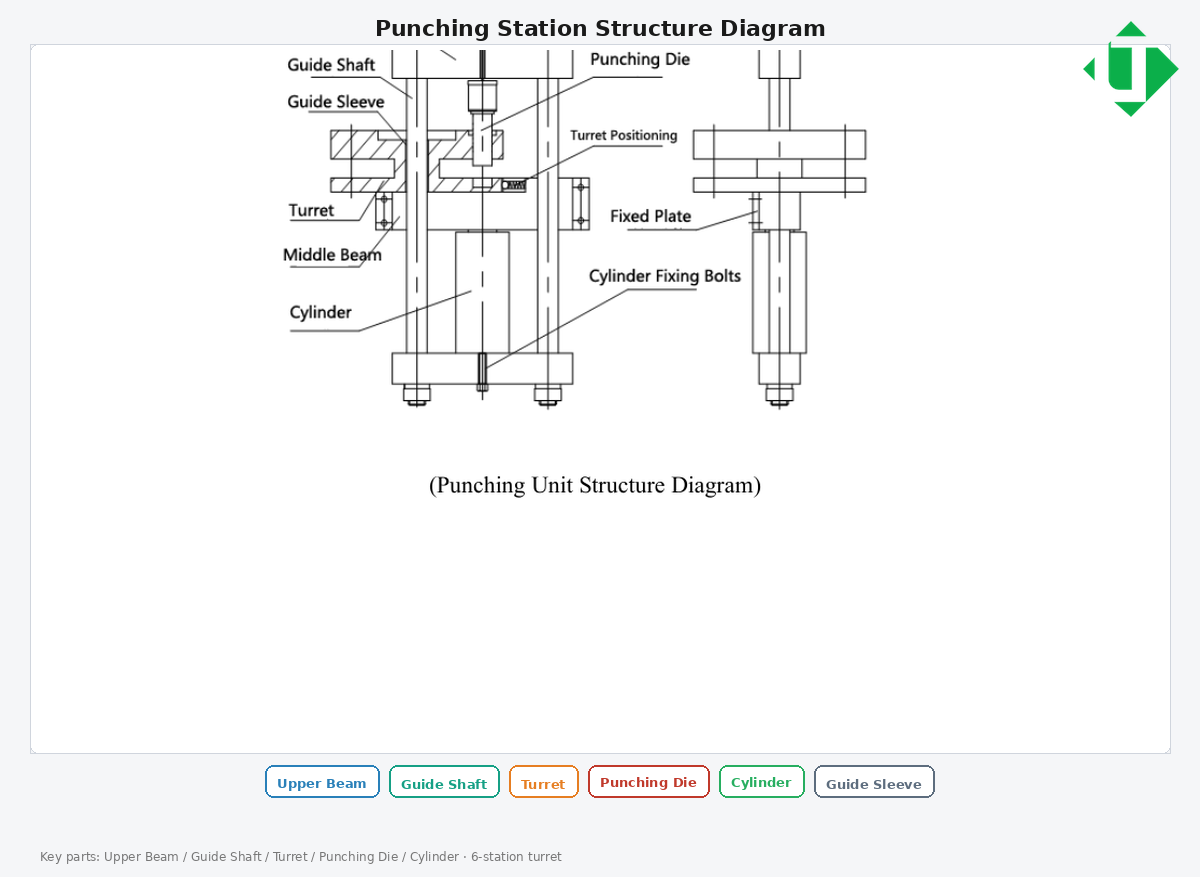
Punching station structure diagram (EN)
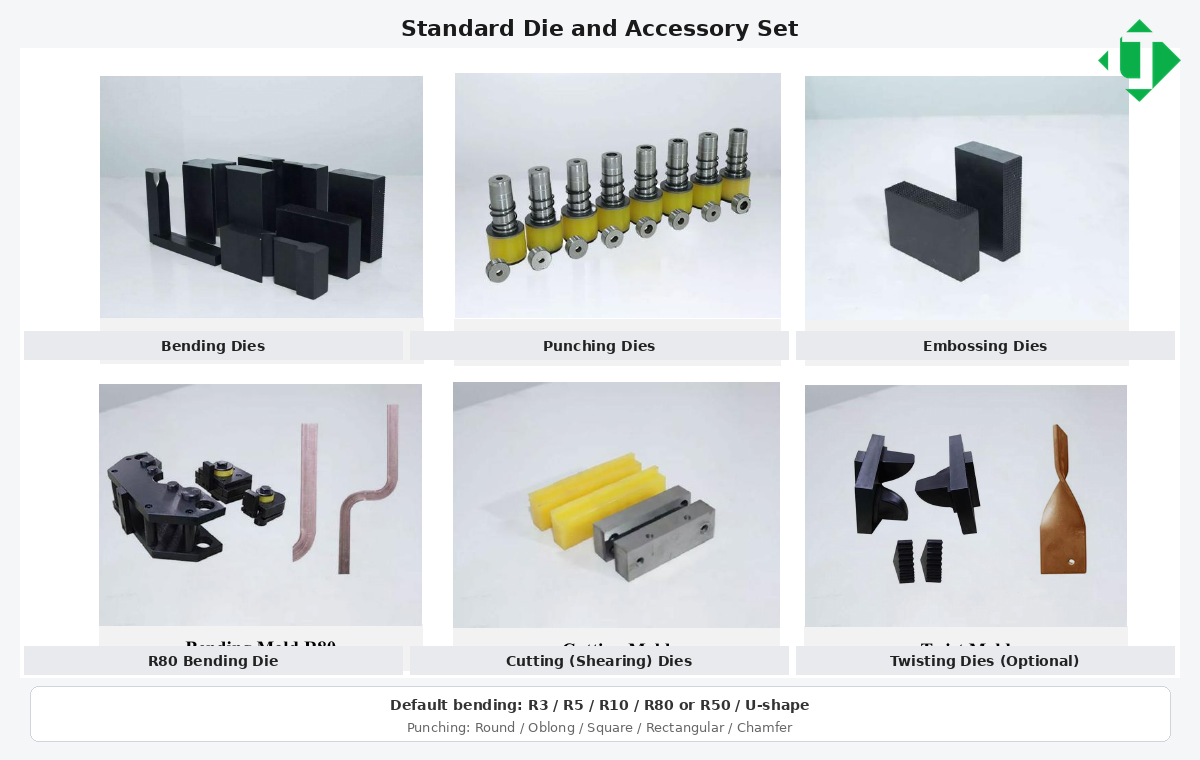
Standard die and accessory set with English labels
Define accuracy before you set up
| Drawing control | Why |
|---|---|
| Datum | All positions measured from here |
| Hole centre pitch | Kit fit to breakers / terminals |
| Edge distance | Die strength + standard compliance |
| Positional tolerance | Pass/fail for FAT |
| Profile (round/oblong/rect) | Die selection |
Verify finished holes from the drawing datum on multiple consecutive parts.
Dies, clearance, and turret practice
- Select dies for actual material, temper, thickness, and profile.
- Confirm punch/die clearance; re-check after Cu↔Al switches.
- Turret designs keep several dies centreed for faster changeover.
- Illustrative starter families (confirm on order): round Ø7/9/11/13/17; oblong Ø11×15, Ø13×18, Ø17×21.
- Published ranges: 303 Φ4.3–Φ25 · 503 Φ4.3–Φ30 · 803 Φ4.3–Φ34.
After each die change: inspect burr, deformation, and edge quality before releasing the batch.
Positioning: manual vs servo / CNC
| Method | Helps when… | Still manual? |
|---|---|---|
| Scale / stop | Low mix | Yes |
| Servo axis | Recurring coordinates | Load / clamp often yes |
| CNC program | Multi-hole kits | Tool change / inspect |
Hydraulic punch force and CNC positioning can coexist—compare labor and repeatability, not slogans.
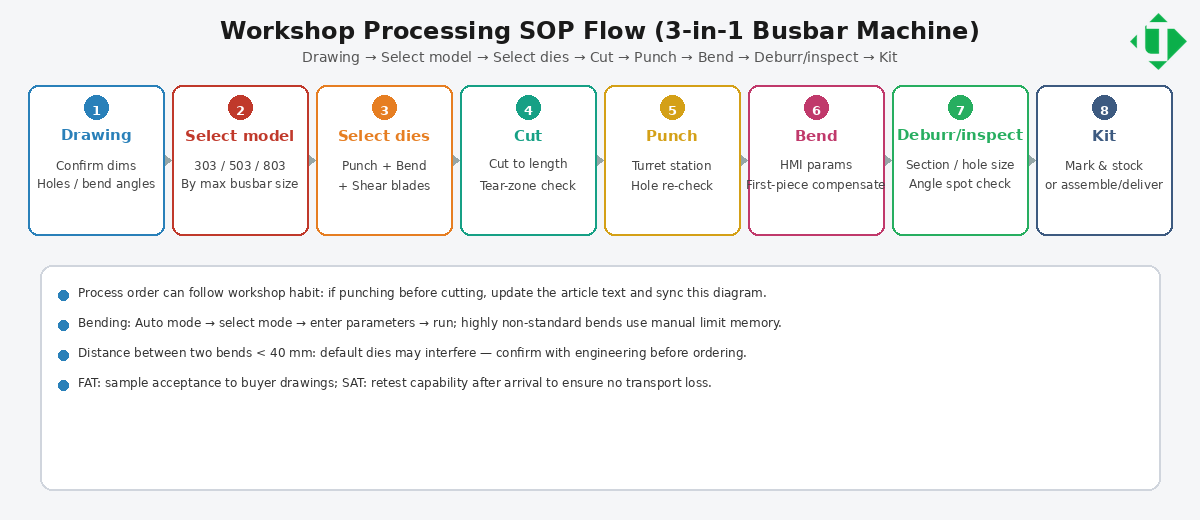
Workshop SOP flow: Drawing → Cut → Punch → Bend → Inspect
Model capacity for punching
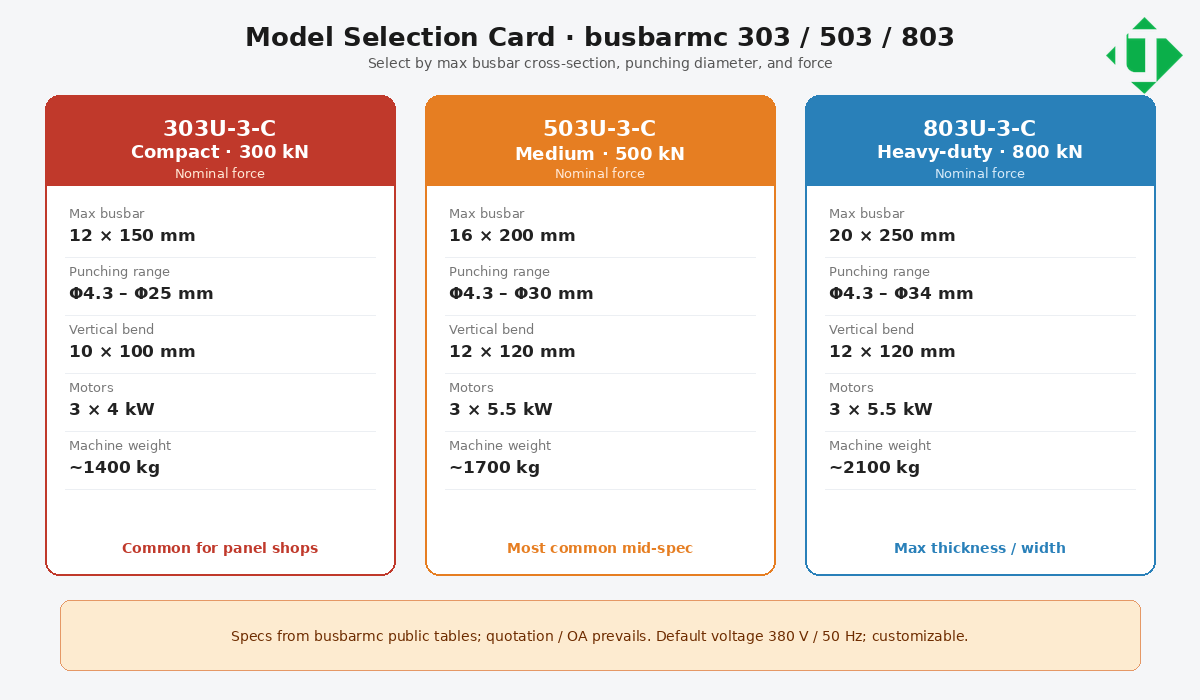
Model selection card: 303U-3-C / 503U-3-C / 803U-3-C
| Entity | 303U-3-C | 503U-3-C | 803U-3-C |
|---|---|---|---|
| Nominal force (kN) | 300 | 500 | 800 |
| Punching diameter (mm) | Φ4.3–Φ25 | Φ4.3–Φ30 | Φ4.3–Φ34 |
| Max thickness / width (mm) | 12 / 150 | 16 / 200 | 20 / 250 |
| Max horizontal bend (mm) | 150 / 12 | 200 / 16 | 250 / 20 |
| Max vertical bend size (mm) | 10×100 | 12×120 | 12×120 |
| Motor power | 3×4 kW | 3×5.5 kW | 3×5.5 kW |
FAT checks for punched busbars
- Hole diameters / oblong dims vs drawing
- Positions from datum (first / mid / last)
- Edge distance minimums
- Burr height and surface marks
- Deformation around dense hole fields
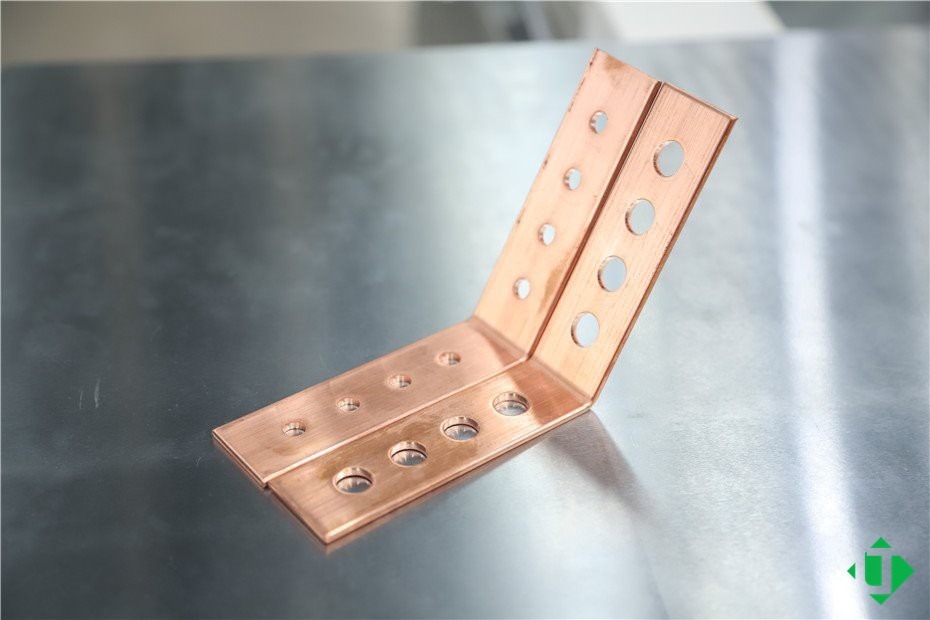
Copper samples after cut, punch and L-bend
FAQ
What decides hole accuracy?
Datum discipline + positioning method + die condition + stable material—not a single brochure micron claim.
Can the same turret punch copper and aluminium?
Often yes with correct clearance and force margin. Re-qualify after material changes.
Round vs oblong dies?
Oblongs need matching die pairs and orientation control; list them explicitly in the RFQ.
Where does punching sit on a 3-in-1?
As an independent station beside shear and bend; three pump groups allow parallel work when staffed.
Related technical guides
- Busbar Cutting Machine Guide for Lagos Switchgear and Panel Builders
- Copper vs Aluminium Busbar Processing for Nigerian Panel Shops — Tooling, Clearance and Springback
- How to Choose a Copper Busbar Machine for a Nigerian Panel Shop — Punch, Cut and Bend
- What Is a Busbar Machine? Cutting, Punching and Bending for Nigerian Switchgear Work
Talk to LTMC about a machine for a Nigerian workshop
If you are specifying a punch, cut and bend package for a switchgear, panel or busduct shop in Lagos, Abuja, Port Harcourt or Kano, tell us the copper or aluminium sizes you run, the daily piece count, and whether the machine will sit on a three-phase 415 V / 50 Hz supply. Lighting circuits at 230 V / 50 Hz are not suitable for these machines.
Sea freight is normally arranged to Apapa, Tin Can Island or Lekki Deep Sea Port in Lagos, with Form M and SONCAP documents prepared against the commercial invoice. Leanne will confirm voltage, dies and packing before the machine leaves the factory.
Email [email protected] or WhatsApp +86 13853146766. You can also use the contact form on this site. Public model pages: 3-in-1 busbar machines, 303U-3-C, 503U-3-C, 803U-3-C, plus CNC bending, CNC punching and cutting, and dies and moulds.